Peer-reviewed articles
The place of alcohol in Abu Dhabi, capital of the United Arab Emirates, has undergone fast-paced changes over the last decade. While drinking was initially restricted to hotels, it is now possible to engage in this practice publicly; and alcohol has become central within the new leisure and entertainment districts. This paper argues that such evolutions reflect shifting representations of alcohol in the state’s discourse. Whereas it had first been constructed as a ‘necessary evil,’ an exogeneous substance required to cater to the needs of a growing foreign workforce, alcohol is now portrayed as a primary feature of the world-class city. These transformations draw a moral geography of the capital which produces specific norms: at the same time as they serve Abu Dhabi’s ambitions to become a ‘global destination’ for international tourists, and for the expatriate ‘talents’ who will serve the state’s project of economic diversification, they exclude from the making of the world-class city those (both citizens and non-citizens) who are not at ease with such changes.
In the late 2000s, the gambūʿa, a beehive-style hairdo, made its apparition in the cities of the Arab Gulf. Sported by young women and characterized by a large hump above the head, it gave the impression of long and voluminous hair under the veil. The extravagant height of the hairdo and its association with the consumerist environment of Khaleeji commercial spaces soon made it the object of various condemnations. As the gambūʿa started declining in popularity, it simultaneously gained in visibility on social media, effectively turning into an Internet meme. Based on interviews conducted at the time with young Emirati women, and on an analysis of online cultural productions dedicated to the gambūʿa, this paper explores how the cultural fortunes of this controversial hairdo shed light on some of the tensions at play in contemporary Khaleeji societies, notably around representations of morality, national identity, and modernity. These tensions took on a gendered dimension, targeting specifically the category of “girls” (al-banāt). As the gambūʿa turned into a meme, however, the meanings attributed to the hairdo shifted, making it an object of online humor and ridicule rather than moral blame, and allowing young women to participate in the cultural productions around the hairdo. Ultimately, I show how the gambūʿa became an element of cultural intimacy through its integration into a regional Khaleeji pop culture.
Inaugurated in Dubai in 2022, the Museum of the Future is a museum without artworks or collections. Visitors are immersed in speculative scenarios whose stated objective is to elicit optimism towards the future. While the challenges presented are aligned with those forecast by contemporary science – climate change, mass extinction, depleted resources – the solutions offered by the museum revolve around technological innovation, a central investment sector for the Emirati state. In a context shaped by the preparation of the post-oil era, the future therefore appears as something to be created rather than predicted, and the museum becomes the place in which to experience the “visions” of the rulers.
Although over time mass migration has brought about de facto cosmopolitan situations in Gulf cities, foreign residents continue to experience segregation and endure exclusionary policies and practices on a daily basis. This article unpacks two sets of internal tensions that characterise cosmopolitanism in the Gulf, through a comparison of cosmopolitan discourses and practices in Abu Dhabi, Riyadh and Jeddah. The first tension relates to official discourses and policies: Saudi and Emirati governments design and enforce exclusionary policies and, at the same time, publicly endorse cosmopolitan ideals and projects—consisting in Islamic universalism for Saudi cities and the rhetoric of tolerance for the United Arab Emirates. Such cosmopolitan claims are, moreover, reflected in the aspirations and subjectivities of migrants and local citizens while also generating feelings of alienation. We call this discursive paradox cosmopolitanism in denial. The second tension concerns migrants' everyday practices and modes of consumption in urban spaces. We argue that these are best understood as a form of segregated cosmopolitanism, whereby both Gulf citizens and the various migrant communities explicitly acknowledge, and at times consume, urban diversity but also maintain certain boundaries. Drawing on an analysis of both governmental and individual discourses, as well as on ethnographic observations collected over a decade of fieldwork in Saudi Arabia and the United Arab Emirates, our research engages with theories of cosmopolitanism from a situated perspective. As such, it moves away from the dominant unitary and normative approach to cosmopolitanism and instead emphasises both the resilience and transience of everyday cosmopolitan situations.
Since the mid-2000s, urban development in the United Arab Emirates has been driven by the leitmotiv of economic diversification, aiming to prepare the post-oil era. This new orientation illustrates a change in rhetoric: while spectacular urban projects were once devised as agents and symbols of the country’s entrance into modernity, they are now advertised as instruments for “shaping the future”. This paper argues that this shift cannot be simply analyzed as a marketing strategy or an aspirational discourse. Rather, it signifies a singular turn within dominant regimes of historicity in the UAE, which has performative effects on the city itself and on its residents’ everyday lives. This paper thus explores how officially produced images of the city embody these visions of the future, and translate them into the materiality of the city; but also how they contrast with the lived temporalities of city-dwellers and the imaginaries they produce.
In Abu Dhabi, the capital of the United Arab Emirates, foreign residents constitute more than 88% of the population. This demographic situation is the result of both massive flows of labor migration following the advent of the oil wealth in the late 1960s, and practical limitations in the attribution of nationality which prevent foreign residents from gaining citizenship. This paper offers a look at migration in the Gulf through a different angle, by focusing on second-generation foreigners who are born in Abu Dhabi. Based on ethnographic fieldwork among young men and women of diverse Arab nationalities who all grew up in the city, I show how these young adults craft modes of sociability and daily practices which make use of the interstices of urban space—informal spaces, vacant plots, and parking lots. These practices allow them to build a sense of belonging to the city at a very local scale, thus bypassing the national community to which they do not have access. This locality is also inherently cosmopolitan through being in touch with the cultural and linguistic diversity of Abu Dhabi’s residents. Although it is rarely acknowledged as such, I argue that the ordinary cosmopolitanism at play in the shaping of Abu Dhabi’s specific locality contributes to shaping young people’s subjectivities and their expressions of belonging.
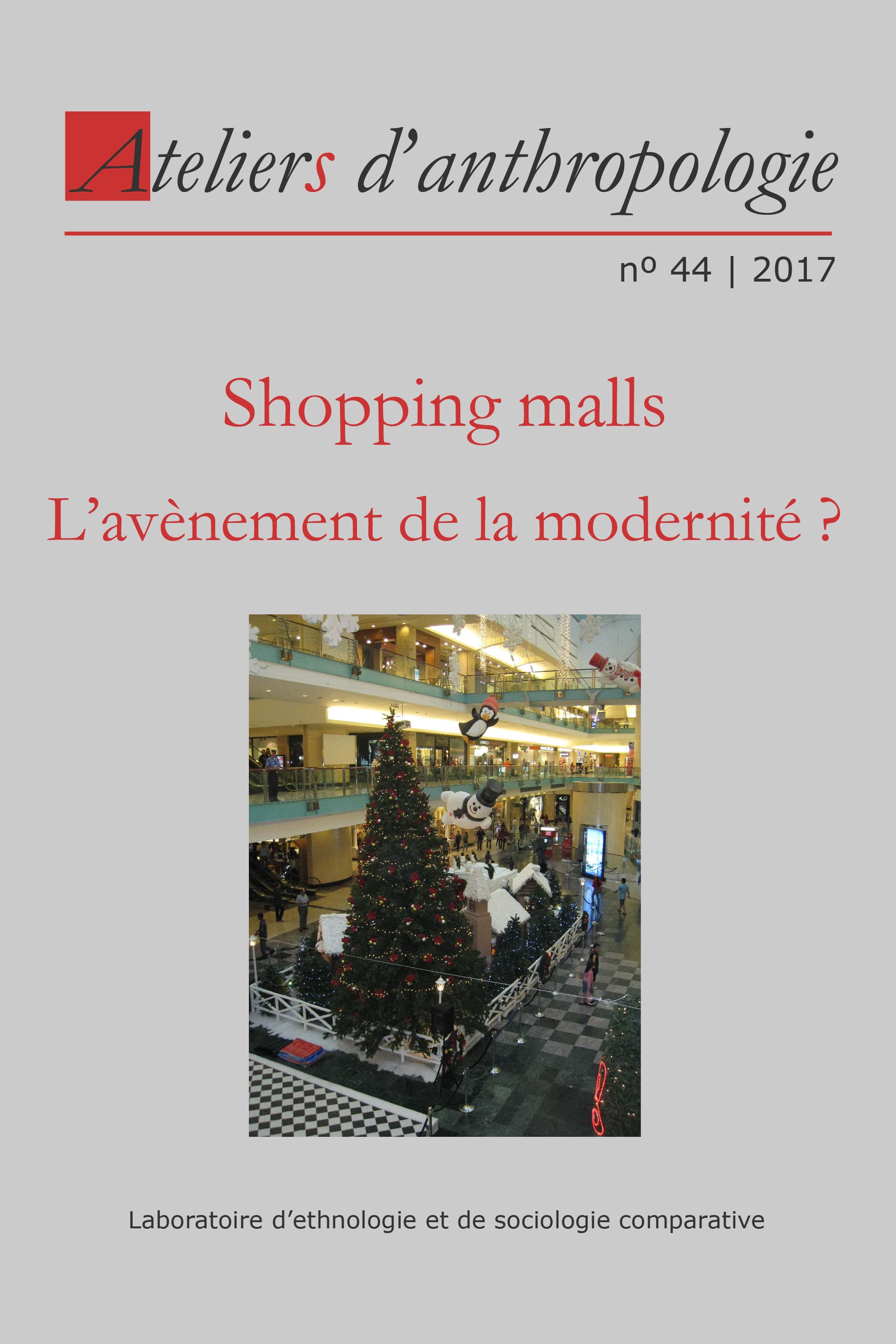
Since the 2000s, the introduction of shopping malls in the United Arab Emirates has been contributing to new urban development trends, whose objective is to implement economic diversification and turn the Emirati city into a global destination. The ethnographic study of their uses shows how they contribute to producing new forms of coexistence between the highly diverse populations residing in these cities. Within the malls, residents negotiate their modes of interaction and behavior towards population categories they rarely encounter elsewhere—a process that is not without conflict. Emirati malls are also social scenes where people develop new forms of sociability, in turn shaping new subjectivities—particularly in the case of young adults who use these spaces to perform the role of modern, cosmopolitan subjects. The connection between malls and urban development, as well as the generational dimension of the practices carried out there, eventually lead us to question the specific temporalities of the mall as an urban form and a moment in Emirati urbanity.
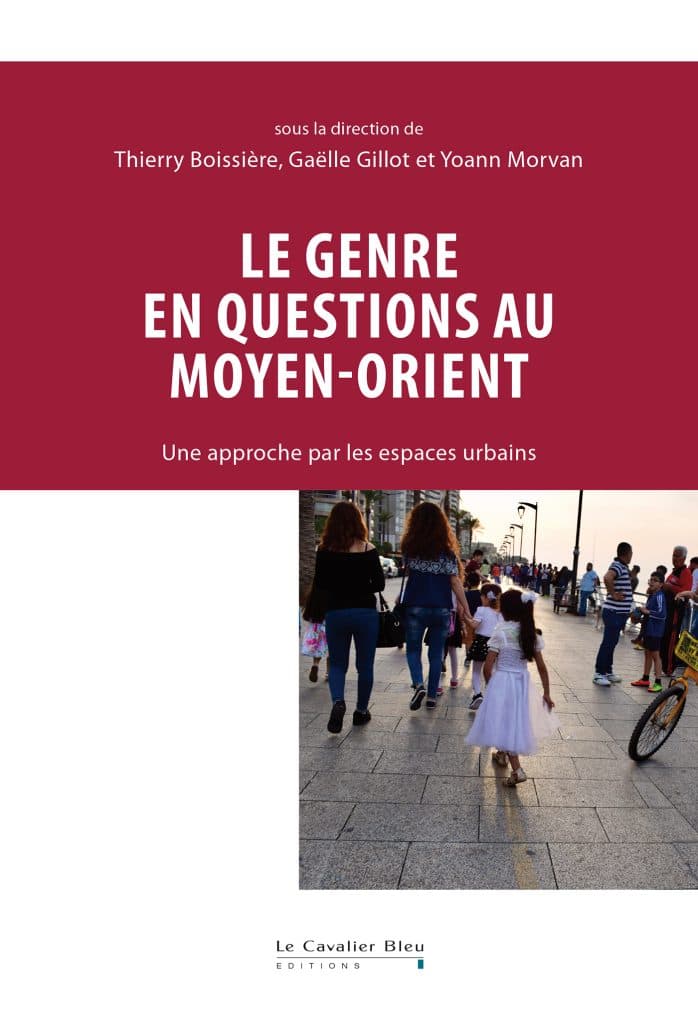
The Corniche of Abu Dhabi is one of the main places to go out or take a stroll in the capital of the United Arab Emirates. Through its multiple uses, the Corniche is a scene where diverse ways of sharing the urban space mirror the social, ethnic and economic characteristics of Emirati society. The Corniche is a public space designed and used as such, in a city where class and ethnic hierarchies prevail in daily interactions, and where the shaping of suitable territories allows for the co‑presence of the various groups inhabiting the city. The differential occupation of space on the Corniche produces a kind of intimacy which regulates interactions with others, both on an individual and collective level (through the practice of sports, or socializing with family or friends). This intimacy in the open air is one of the ways city‑dwellers can appropriate urban space in Abu Dhabi.
The love relationships of young adults in the United Arab Emirates often take on an important spatial dimension, whether they are lived or fictional. The recent urban space of Emirati cities crystallizes indeed social norms that are reinforced by the coexistence of varied populations. From the parking lots to the shopping malls, young adults use the potentialities of space to emancipate themselves, although temporarily, from these norms, while playing on the boundary between transgression and respectability, but also while looking for other horizons in the imagined spaces of their cultural productions, blogs and short movies, or within online social networks.